
A rhythm your managers
can actually keep
Four steps that repeat every week. Most of it runs itself, which is the only reason it survives a busy quarter.
Prepare
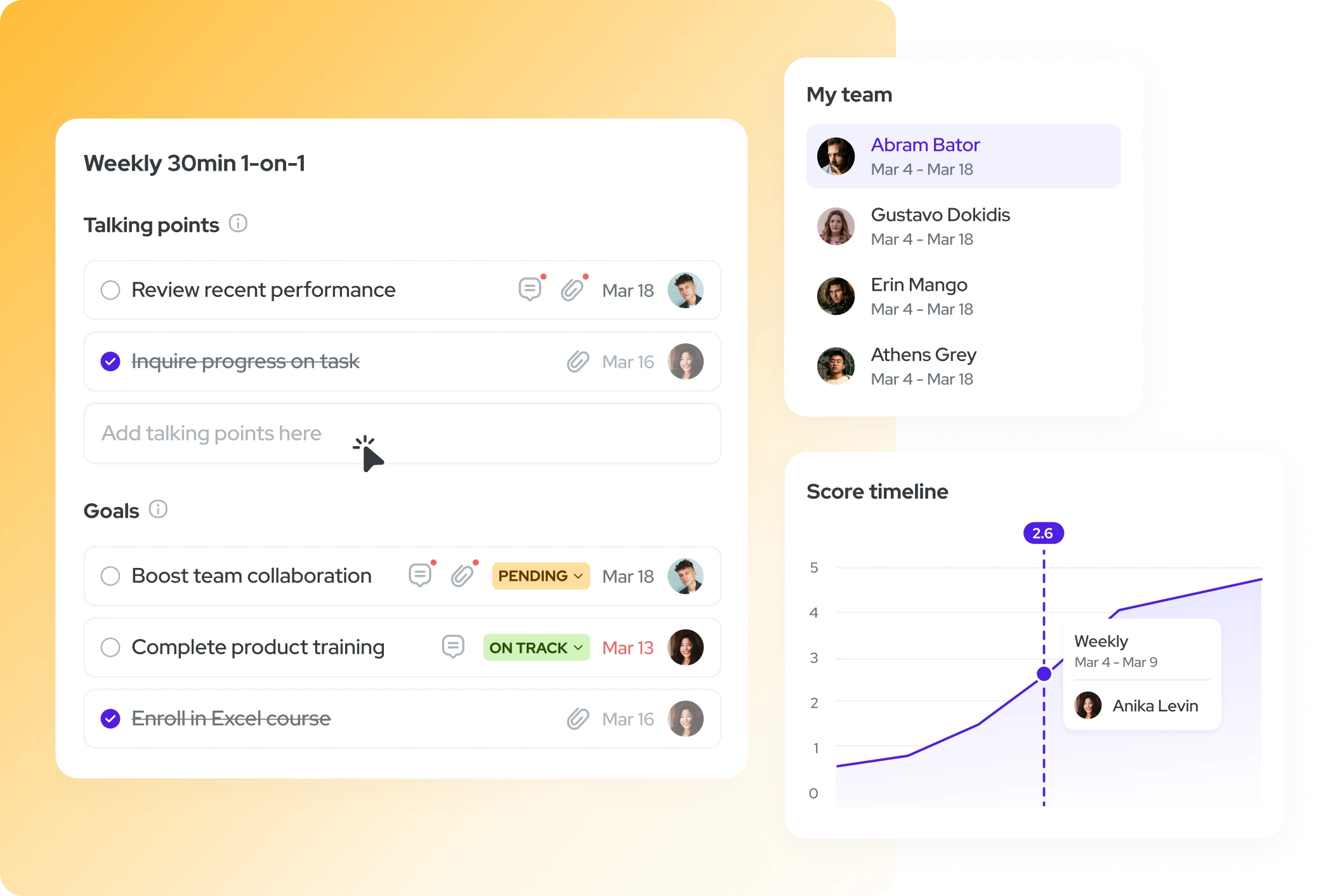
The agenda is already waiting. Open items from last time are at the top, and both of you add talking points during the week as things come up, so nobody arrives trying to remember what mattered.
- Open items carried forward automatically
- Both sides add topics before the meeting
- Shared, so there are no surprises
Meet
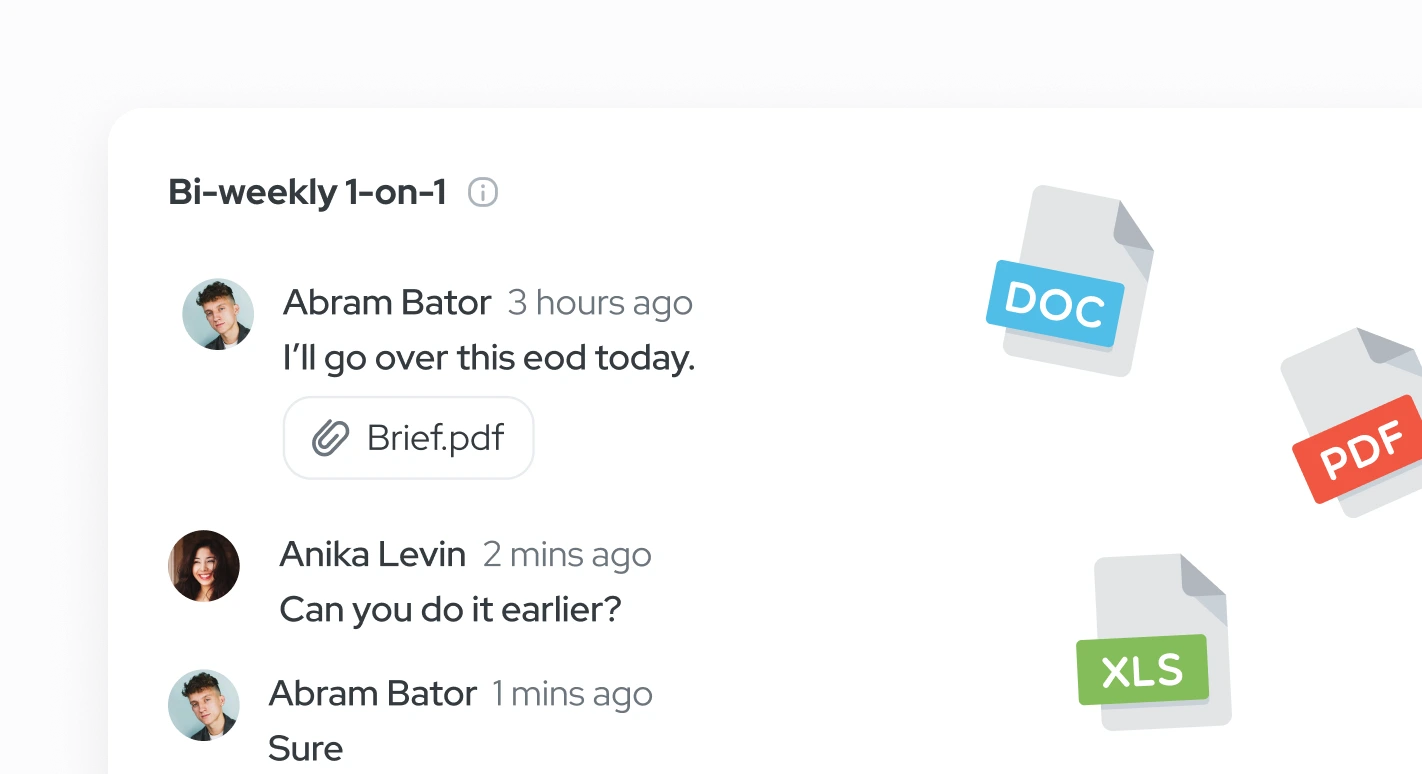
Talking points, shared notes, and feedback live in the same place as the meeting. The employee’s topics come first, which is the single change that most improves the conversation.
- Notes and comments attached to each point
- Attachments and links where they belong
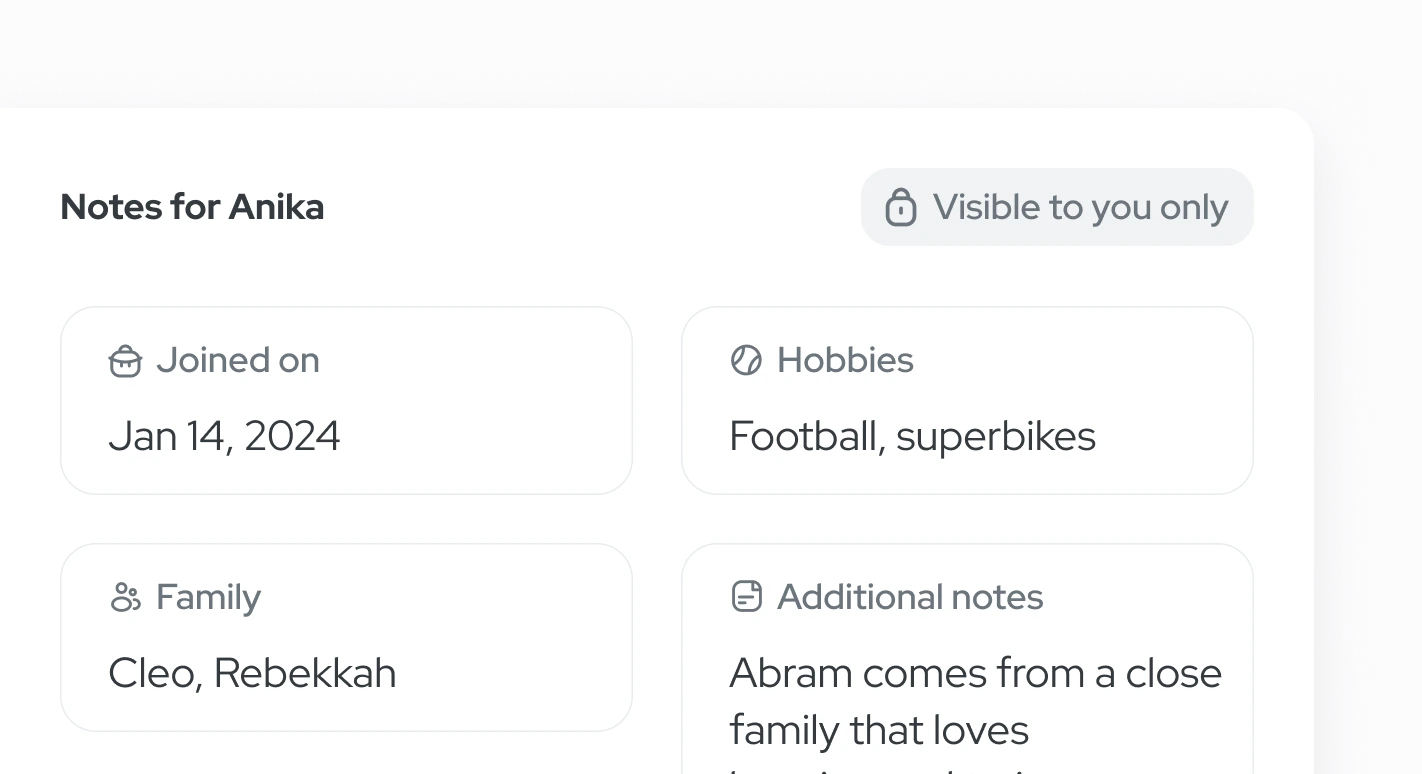
- Private manager notes stay private
Commit
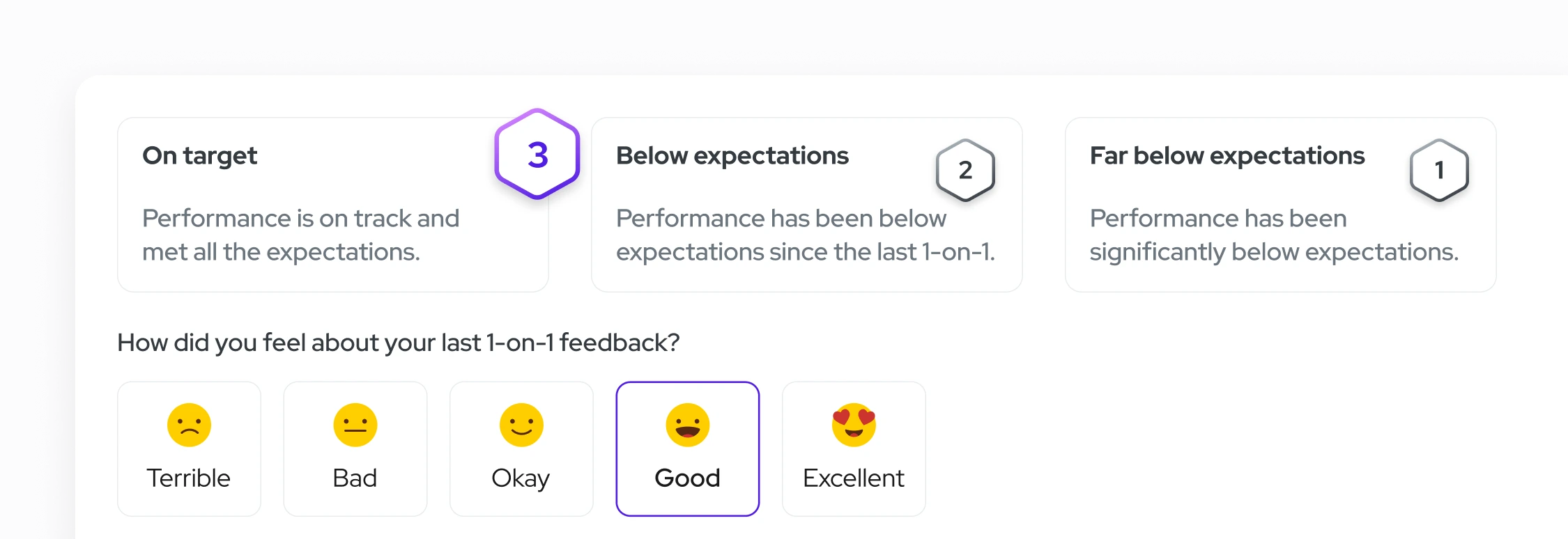
Before anyone leaves, action items get an owner and a date. Not a vague “I’ll look into it”, but a specific commitment that both people can see afterwards.
- Owner and due date on every item
- Visible to both sides
- Linked to the goal it serves
Follow through
Anything still open opens next week’s agenda. That is the whole trick: the loop closes itself, so following up costs nobody any effort or memory.
- Open items become the next agenda
- A year of history when review time comes
- No chasing, no reminders to write
What the first 30 days
look like
Rolling this out across a team is the real question. Here is the honest answer.
Day 1
Set up
Create the account, import your team, and connect Google Calendar. Ten minutes, one person.
Week 1
First one-on-ones
Managers run their first HeyRamp meetings using a starting agenda template. Nothing else changes yet.
Week 4
First insights
Enough history exists to see which teams are meeting consistently and which commitments keep slipping.
Quarter 1
First review cycle
Reviews get written from a real quarter of notes and commitments instead of the last three weeks of memory.
What changes, by role
A process only sticks if it is better for everyone in it, not just the person who chose it.
For managers
Less prep, no note-taking admin afterwards, and a record that makes review season a summary rather than an archaeology project.
- The agenda is already built when you open it, so preparation stops being a task you did not do
- Coaching prompts for the conversations most managers avoid, at the moment you need them
- Commitments you made are tracked too, not just the ones your report made
- A year of evidence when it is time to argue for someone’s promotion or raise
- One place to check before a review instead of six months of scrolling back through Slack
For individual contributors
A standing place to raise things, visible commitments in both directions, and evidence of your own progress over time.
- Add topics during the week, so you stop forgetting the thing that annoyed you on Tuesday
- Your items come first on the agenda, which makes it your meeting rather than a status report
- Blockers get an owner and a date, so raising one actually leads somewhere
- A record of what you delivered that you control, not just what your manager remembers
- Feedback goes upward as well as down, with a structure that makes it less awkward to give
For HR and leadership
One consistent process across every team, audit-ready documentation, and visibility into where management is and is not happening.
- The same process in every team, so the experience of being managed does not depend on your manager
- Time-stamped records that satisfy legal and compliance requirements without extra admin
- Coverage data showing which teams are actually meeting and which quietly stopped
- Early signals on retention risk, weeks before someone resigns rather than after
- Review cycles built from real history, which makes calibration a shorter and fairer meeting
You are not rolling this out alone
Training on one-on-ones, performance reviews, and personality testing is built into the platform in long- and short-form video from experienced practitioners, so managers who have never been taught how to run these conversations can learn inside the tool they are using to run them.

Better one-on-ones start this week
Set up your first agenda in ten minutes. Free for 30 days, no credit card required.