
Your AI mandate is only as good as your managers
For leaders driving AI adoption
Licenses do not equal adoption. Make it a standing topic in every one-on-one, track what people actually commit to, and report progress with something more solid than a hunch.
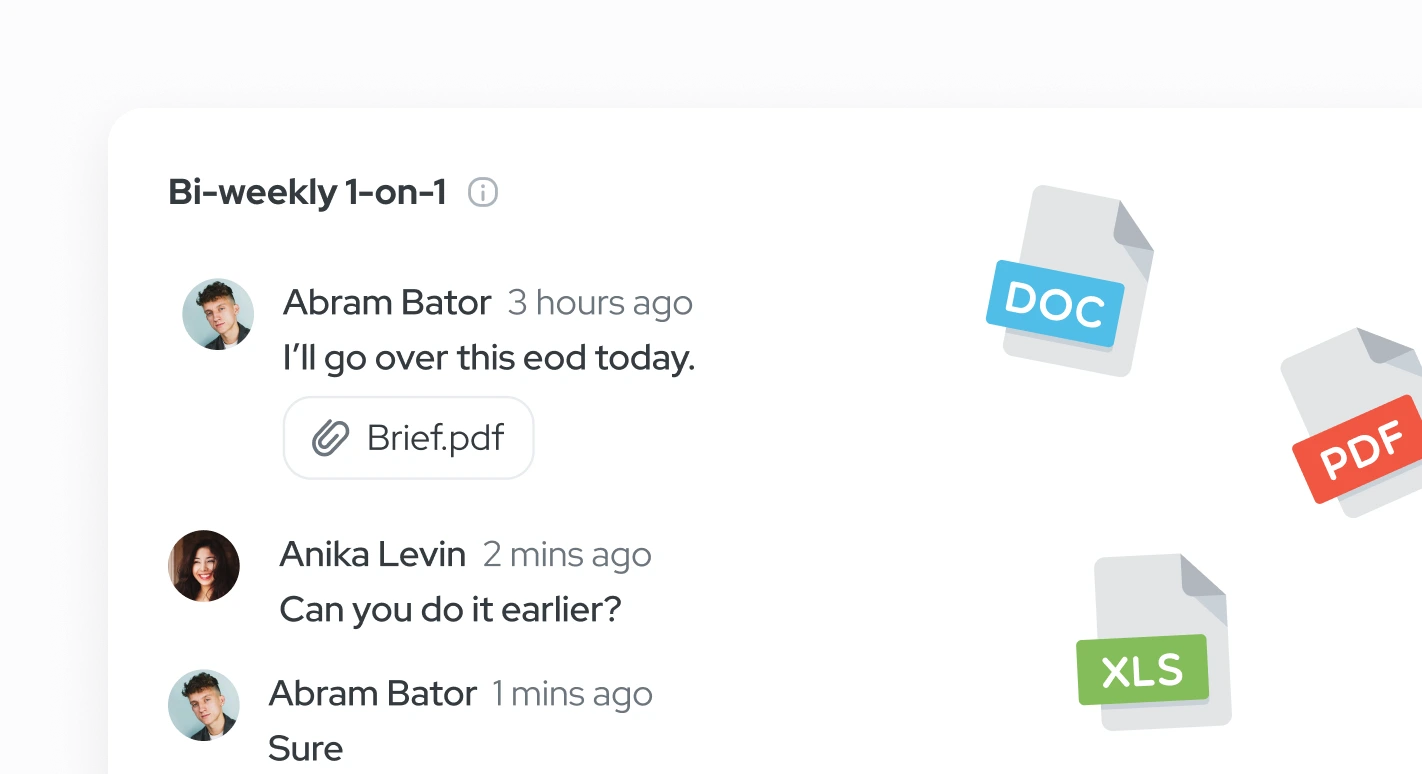
Everyone bought the tools. Now what?
The distance between a rollout announcement and changed behavior is where most AI programs quietly stall.
Licenses bought ≠ tools used
Seat counts tell you what procurement did, not what changed. Plenty of organizations are paying for tools that a third of the workforce has opened once.
No visibility into who is blocked
The people who have quietly given up rarely file a ticket about it. Without a routine conversation, the reasons stay invisible and the same blockers repeat across teams.
Nothing you can put in front of the board
When leadership asks how adoption is going, the honest answer is usually an anecdote. Anecdotes do not survive the follow-up question.
Adoption happens one conversation at a time
You already have a weekly meeting with everyone in the organization. This uses it.
Set an adoption goal per team
Not a company-wide mandate. A specific, owned goal for each team: what should be different in ninety days, and who is accountable for it.
Make it a standing 1:1 item
The goal attaches to the recurring one-on-one, so it is discussed every week by the person doing the work and the person accountable for it.
Capture blockers and commitments
What did they try, what got in the way, what will they do before next week. Written down with an owner and a date, in the meeting.
Report on real progress
Goal progress and commitment completion across teams, reported alongside whatever usage data your AI tools already produce.
What you can actually show
These come out of the conversations themselves, so they exist whether or not your AI tools expose usage data.
Per-team goal progress
Which teams are moving, which have stalled, and since when.
Commitment completion rate
How often what people agreed to in a one-on-one actually got done. A leading indicator that moves weeks before usage does.
Blockers by theme
The same objection surfacing across six teams is a program problem, not six individual ones.
Coverage
Which managers are having the conversation at all. Adoption programs usually fail in the teams that never discussed it.
Report these alongside the usage and spend data your AI vendors already provide. HeyRamp measures the management activity driving adoption, meaning the commitments, blockers, and goal progress, rather than replacing your vendors’ own telemetry.
Who this is for
Mid-size companies
Large enough that a mandate does not reach everyone, small enough that there is no dedicated transformation office to run the program. The managers are the delivery mechanism, whether or not anyone has told them so.
- Roll out through existing one-on-ones, with no new meeting
- Per-team goals rather than a single company target
- Evidence for the board without a reporting project
Public sector & government
Adoption has to be demonstrable, documented, and defensible. The interesting question is rarely whether people are enthusiastic. It is whether you can show what was tried, by whom, and what came of it.
- Time-stamped records of commitments and outcomes
- GDPR compliant, with data you own and can export
- Documentation that holds up to review
Setting it up
The documentation covers structuring adoption goals per team, the standing agenda item, and how to pull reporting together for leadership.

See what adoption looks like in practice
A 20-minute walkthrough of how teams run AI adoption through their existing one-on-ones.